
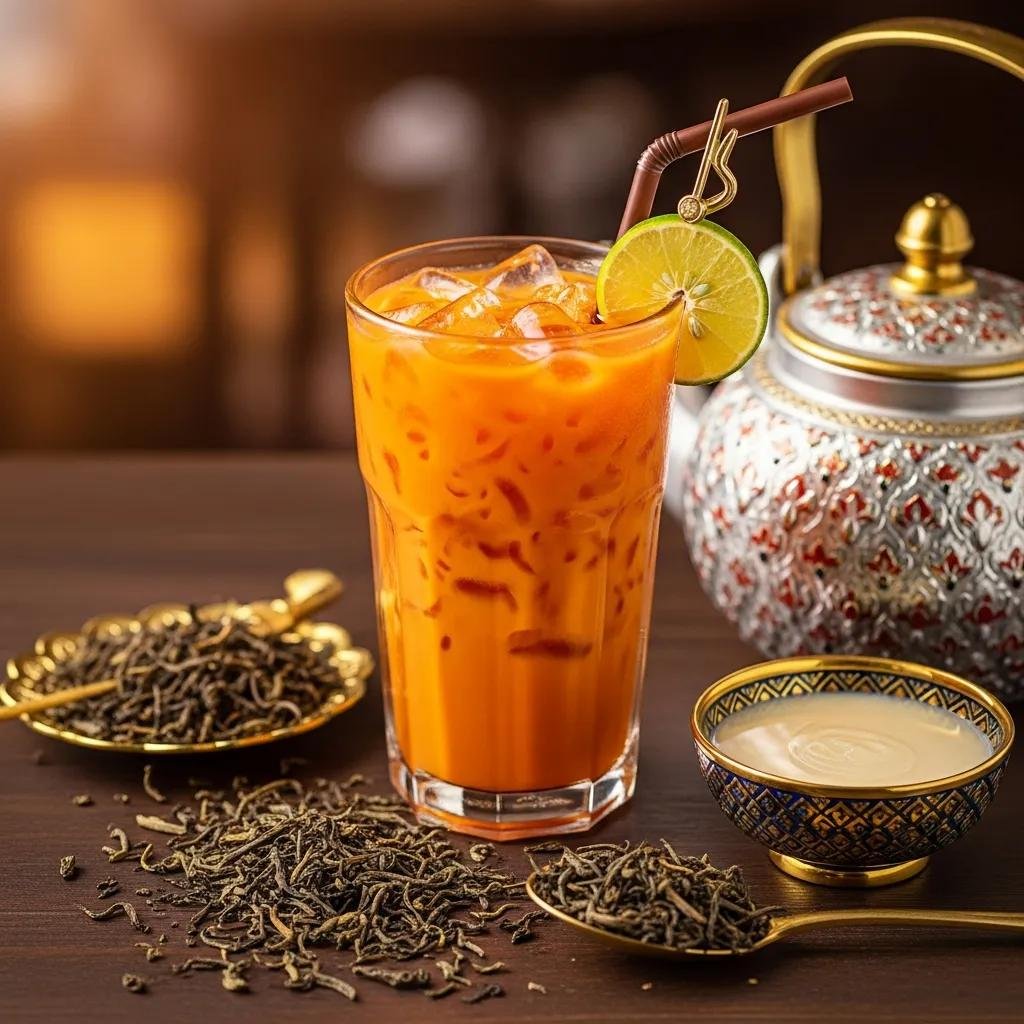
Thai iced tea (cha yen) at home takes 10 minutes and four ingredients: strong-brewed Thai black tea, sugar, sweetened condensed milk and evaporated milk, over a tall glass of ice. The recipe below makes two 16 fl oz glasses, tastes like the restaurant version, and comes with the lighter and dairy-free variations most people ask for. Jump to the recipe card or read the notes first.
What You Need for Thai Iced Tea
- Thai black tea leaves. The classic orange cup is brewed from a strong, malty black tea, traditionally an Assam-style leaf. Instant "Thai tea mix" sachets work but usually contain food coloring and sugar; loose leaf lets you control strength and sweetness, and brews a deep amber rather than the bright orange of colored mixes. We use our own Assam Thai tea leaves.
- Sugar. White sugar is standard; palm or coconut sugar adds a caramel note.
- Sweetened condensed milk. The source of the drink's richness and most of its calories.
- Evaporated milk (or half-and-half, or whole milk) for the pale swirl on top.
- Optional aromatics: one star anise, a split cardamom pod, or a few drops of vanilla in the brewing water. Many Thai vendors use a spiced blend; adding one or two whole spices gets you close.
- Lots of ice. The drink is meant to be very cold and slightly diluted.
How to Make Thai Iced Tea, Step by Step
- Brew a strong concentrate. Bring 2 cups (480 ml) of water to a boil. Add 4 tablespoons (about 12 g) of Thai black tea leaves and the optional star anise. Reduce the heat and simmer gently for 5 minutes, then take it off the heat and steep another 5 minutes. This is roughly double the strength of a normal cup, which is what stands up to ice and milk.
- Sweeten while hot. Strain the tea through a fine sieve or cloth into a jug. Stir in 2–3 tablespoons of sugar until dissolved. Taste: it should be noticeably sweeter than you would drink hot, because ice and milk will soften it.
- Chill. Let the concentrate cool for 10 minutes, or refrigerate it. Pouring hot tea straight onto ice melts the ice and thins the drink.
- Build the glass. Fill two tall 16 fl oz glasses with ice. Pour the tea concentrate to about three-quarters full.
- Add the milks. Stir 1 tablespoon of sweetened condensed milk into each glass, then float 2 tablespoons of evaporated milk on top so it swirls down through the orange tea. Serve with a straw and stir before drinking.
Make-ahead: the sweetened concentrate keeps in the fridge for 3–4 days. Brew a bigger batch on Sunday and build glasses through the week.
Recipe Card: Thai Iced Tea (Cha Yen)
| Yield | 2 glasses (16 fl oz / 480 ml each) |
|---|---|
| Prep time | 5 minutes |
| Brew time | 10 minutes |
| Total time | 15 minutes plus chilling |
| Ingredients | 2 cups (480 ml) water · 4 tbsp (12 g) Thai black tea leaves · 1 star anise (optional) · 2–3 tbsp sugar · 2 tbsp sweetened condensed milk · 4 tbsp evaporated milk · ice |
| Per glass, approximate | 170–220 kcal · 60–130 mg caffeine |
Variations
Lighter Thai iced tea (about 100 kcal)
Skip the sugar in the concentrate, use 1 teaspoon of condensed milk per glass instead of a tablespoon, and top with unsweetened oat milk. The tea flavor comes forward and the drink is still creamy.
Dairy-free Thai iced tea
Replace the condensed milk with sweetened condensed coconut milk or 1 tablespoon of coconut cream plus a little extra sugar, and use oat or coconut milk for the float. Coconut suits the star anise note especially well.
Thai tea latte (hot)
Brew the same concentrate, sweeten it, and top with hot frothed milk instead of ice. Same drink, winter version.
Thai green iced tea (cha khiao yen)
Swap the black tea for Thai green tea or jasmine green tea, brew at 80 °C (175 °F) for 3 minutes rather than simmering, and build the glass the same way. Lighter in caffeine and pale green instead of orange.
Decaf or caffeine-free
Brew a Thai botanical infusion, such as butterfly pea flower, lemongrass or bael, as the base. Butterfly pea gives you a blue-to-purple drink instead of orange, with no caffeine. See our caffeine-free Thai botanical infusion.
Why Is Thai Tea Orange?
The bright orange comes from food coloring in commercial Thai tea mixes, usually listed as FD&C Yellow No. 6 or Sunset Yellow FCF. A very strong brew of Assam-type black tea is naturally deep amber, and milk softens it to a caramel tan. Brewed from loose leaf without coloring, the drink is amber-tan rather than neon orange; the flavor is the same.
Tips for Getting It Right
- Brew stronger than feels right. Weak concentrate is the most common reason a home version tastes thin. Double-strength is the target.
- Sweeten hot, not cold. Sugar dissolves in the hot concentrate; it will not dissolve in an iced glass.
- Strain well. Fine leaf particles make the drink cloudy and gritty. A cloth filter or paper coffee filter works.
- Do not boil the milk. Add condensed and evaporated milk to the cold, built glass only.
- Simmering is traditional for cha yen and extracts more body than steeping alone. If you prefer a gentler cup, steep 5 minutes off the heat instead of simmering and use a little more leaf.
Related reading
- Does Thai Tea Have Caffeine? Per-cup numbers vs coffee
- Thai Tea Calories by cup size and recipe
- Assam Thai Tea: the black tea leaves used to brew Thai iced tea
Frequently Asked Questions
How do I make Thai iced tea from scratch without a mix?
Brew loose-leaf Thai black tea at double strength (about 2 tablespoons of leaf per cup of water), simmer 5 minutes, sweeten while hot, chill, then pour over ice and add condensed and evaporated milk. That is the whole recipe above; no mix needed.
What tea is used for Thai iced tea?
A strong black tea, traditionally an Assam-style leaf grown in northern Thailand, sometimes blended with a little Ceylon. Some vendors add star anise, tamarind seed or vanilla. Green tea makes the green version.
Can I make Thai iced tea without condensed milk?
Yes. Sweeten the concentrate with sugar and use whole milk, half-and-half or a plant milk for the float. It will be less rich; add a little extra sugar or a spoon of coconut cream to compensate.
How much caffeine is in homemade Thai iced tea?
Brewed double-strength as in this recipe, a 16 fl oz glass has roughly 60–130 mg. Brewed single-strength and poured over ice, closer to 25–50 mg. Our caffeine guide has the full per-cup table.
How long does the tea concentrate keep?
Three to four days refrigerated in a sealed jar. Add the milk only when you build each glass.
Nutrition and caffeine figures are estimates from standard ingredient values and typical brewing strength; individual products vary. This article is culinary information, not dietary advice.
Ready to brew? Our Assam Thai tea leaves are the traditional base for cha yen, shipped internationally from Thailand. Browse the full range of loose-leaf Thai tea blends.
Authentic Thai botanical teas, blended in small batches and shipped internationally, with 30-day returns on unopened items.
Shop our Thai teas →Shop all teas