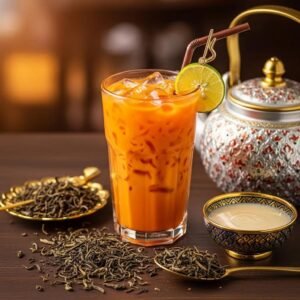
Roselle tea and hibiscus tea are the same drink: an infusion of the dried calyces of roselle (Hibiscus sabdariffa), the fleshy red cups at the base of the flower. It brews tart and deep red, and because it holds no leaf from the tea plant, it is caffeine-free.
The two names work at two levels. "Hibiscus" is the name of the genus; "roselle" is the common name of the one species whose calyces are brewed, so a pack may carry either name. This guide sets out what roselle is, how it differs from the hibiscus in a garden center, what the drink is called around the world and how to brew it.
What is roselle tea?
Roselle tea is a herbal infusion made from roselle calyces, hot or cold. A university extension service's gardening guide gives the plant's name as Hibiscus sabdariffa and says the edible part is the calyx of the flower. The same guide says roselle is native to Central and West Africa and is now grown around the world. The plant belongs to the family Malvaceae.
The calyx is not the petals. It is the ring of sepals below them, which becomes fleshy and deep crimson as the fruit matures. Those dried crimson pieces are what you steep.
Roselle vs hibiscus: are they the same plant?
Roselle is one hibiscus species, so all roselle is hibiscus, but not every hibiscus is roselle. The hibiscus most people see for sale as a plant is a different species: the extension service's hibiscus guide says tropical hibiscus (Hibiscus rosa-sinensis) is what is commonly seen in garden centers and landscapes. Hibiscus tea, by its standard definition, is brewed from roselle calyces, not from the flowers of that ornamental shrub.
| Roselle | Tropical hibiscus | |
|---|---|---|
| Latin name | Hibiscus sabdariffa | Hibiscus rosa-sinensis |
| Grown for | Its edible calyces | Its flowers, in gardens and landscapes |
| Part used for tea | The calyx | Not the plant behind hibiscus tea |
| Other names | Florida cranberry, red sorrel, Jamaica sorrel | Tropical hibiscus |
This article covers roselle only; it gives no brewing advice for other hibiscus species.
Roselle at a glance
| Question | Answer |
|---|---|
| Common names | Roselle, hibiscus, Florida cranberry, red sorrel, Jamaica sorrel |
| Latin name | Hibiscus sabdariffa |
| Plant family | Malvaceae |
| Part used | The calyx, fresh or dried |
| Native range | Central and West Africa, now grown around the world |
| Taste | Tart, often compared with cranberry |
| Color of the calyces | Crimson to deep magenta |
| Caffeine | None: it contains no tea leaf |
What roselle hibiscus tea is called around the world
The drink has a local name almost everywhere it is made. An encyclopedia entry on hibiscus tea lists these:
- Agua de jamaica in Mexico, Central America and parts of South America and the Caribbean.
- Sorrel in many English-speaking parts of the Caribbean.
- Karkadé in Egypt and Sudan.
- Bissap in Senegal and Burkina Faso.
- Zobo in Nigeria.
- Sobolo in Ghana.
- Krachiap in Thailand.
The same entry describes the flavor as tart and cranberry-like, and says the drink is served hot as hibiscus tea or cold as roselle juice. The extension service notes that in the Caribbean roselle is made into a festive Christmas drink.
Does roselle tea have caffeine?
No. Roselle tea is made only from roselle calyces, with no leaf from the tea plant. The U.S. Department of Agriculture's FoodData Central lists brewed herb tea (other than chamomile) at 0 mg of caffeine per 8 fl oz cup (FDC ID 173232, read 10 November 2026). That is the database's general record for brewed herbal tea, not a separate roselle measurement. For comparison, the same database lists brewed black tea at 47 mg per 8 fl oz cup (FDC ID 173227).
How to brew roselle tea
Use about 2 g of dried roselle per cup, pour on water just off the boil and steep 5 to 10 minutes. These are the house brewing guidelines we give for our dried roselle; adjust them to taste.
| Step | Hot cup | Iced |
|---|---|---|
| Dried roselle | About 2 g (1 heaped teaspoon) per 200–250 ml (7–8 fl oz) | About 4 g per 200–250 ml: double strength |
| Water | 90–100 °C (194–212 °F) | 90–100 °C (194–212 °F) |
| Steep | 5–10 minutes | 5–10 minutes |
| Then | Strain and serve | Strain, chill, and pour over ice |
A longer steep gives a deeper color and a tarter cup; a shorter one gives a lighter, rounder pour. The double strength for iced tea allows for the melting ice. You can also cold-brew the dried calyces in the fridge for several hours. For water temperatures and steep times across other teas, see our guide to brewing temperature and steep times.
Roselle tea recipe with fresh calyces
If you grow roselle, you can brew the fresh calyces. A recipe on a Florida county extension blog (posted 25 August 2021) uses 2 cups of fresh roselle calyces, 8 cups of water, 3 tablespoons of fresh lime juice and, if you like, 1/4 cup of honey, and lets the tea steep for 15 to 20 minutes. The extension's gardening guide says Florida calyces are ready to harvest in October or November, when they are tender and plump.
Where to buy roselle tea
Dried roselle may be sold under either name, as roselle or as hibiscus tea. Whole calyces let you see what you are brewing and measure your own strength. Our roselle hibiscus flower tea is whole dried roselle calyces from Thailand, sold loose by weight, with nothing else added. If you would like to compare it with other caffeine-free infusions, our beginner's guide to Thai herbal tea covers the others.
Sources
- University extension gardening guide: Roselle (names, edible part, native range, taste, harvest).
- University extension gardening guide: Hibiscus (tropical hibiscus species).
- County extension blog: Edible flower recipe: roselle tea (fresh-calyx recipe, 2021).
- Encyclopedia entries: Hibiscus tea (definition, regional names, flavor, serving) and Roselle (plant) (family, calyx).
- USDA FoodData Central: brewed herb tea, other than chamomile and brewed black tea (caffeine).
Written by the editorial team. Last reviewed November 2026.
Authentic Thai botanical teas, blended in small batches and shipped internationally, with 30-day returns on unopened items.
Roselle Hibiscus Tea →Shop all teas