
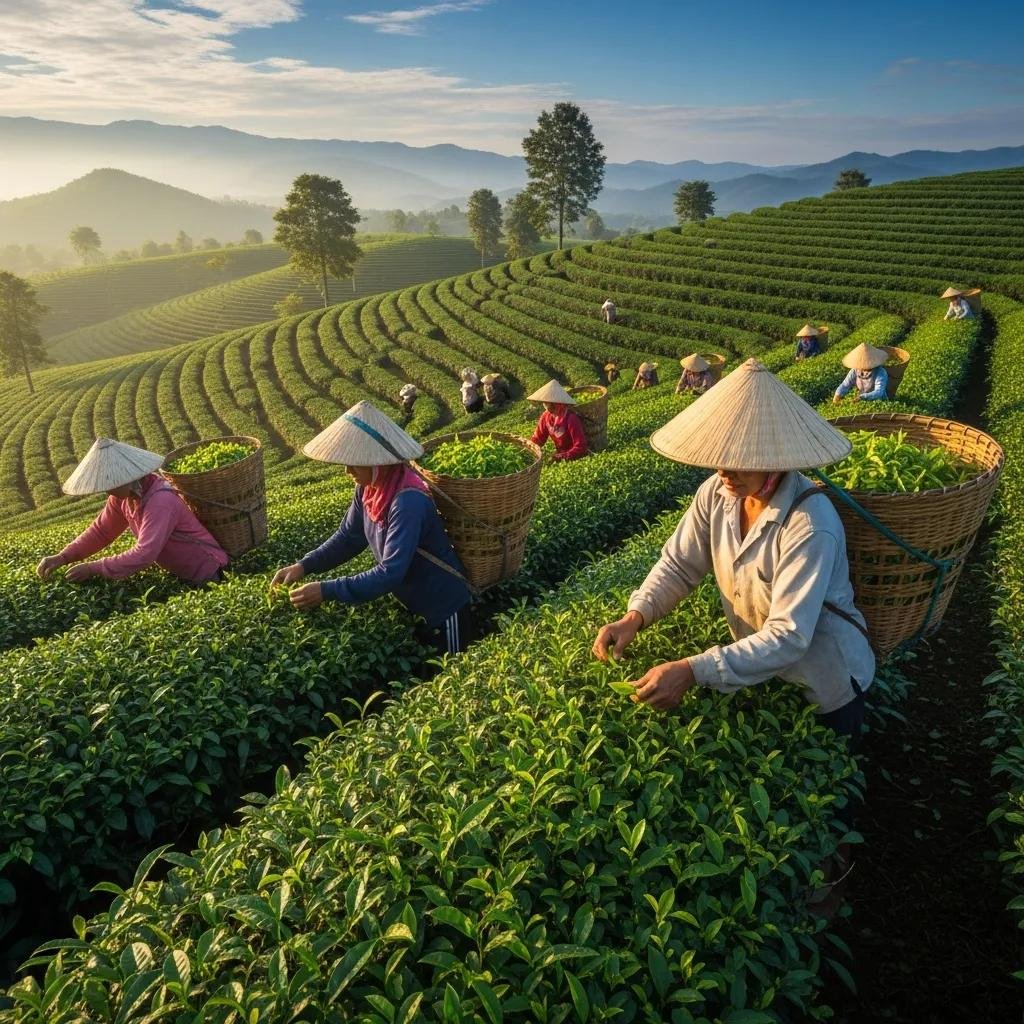
How Sustainable Sourcing Benefits Thai Tea Lovers: Ethical, Eco‑Friendly and Wellness‑Focused Advantages
Sustainable sourcing has become a central topic in the tea world, especially for people who enjoy Thai tea and care about where it comes from. Choosing Thai tea from sustainably managed farms can support higher‑quality products, more ethical working conditions, and gentler environmental footprints. It also allows your cup of tea to reflect your values around fairness, biodiversity, and long‑term community wellbeing. This guide explains what sustainable and ethical sourcing mean in Thai tea, how they relate to wellness‑conscious choices, how they affect landscapes and farmers, and how you can recognise genuinely sustainable Thai tea on the shelf or online.
What Is Sustainable and Ethical Sourcing in Thai Tea Production?
Sustainable and ethical sourcing describes production practices that are environmentally responsible and socially fair. In Thai tea, this means working with growers who look after soil and water, avoid or minimise harmful chemicals, and protect surrounding ecosystems, while also treating workers and smallholders fairly. These approaches aim to keep tea landscapes healthy and productive for future generations, rather than prioritising short‑term yield at any cost.
How Does Ethical Sourcing Support Fair Trade and Thai Farmers?
Ethical sourcing often overlaps with fair‑trade principles, which focus on fair pay, safe workplaces, and more stable relationships between buyers and farmers. When you buy tea from companies that commit to these principles, you help farmers receive fairer prices and more predictable demand. Over time, this can support investment in homes, education, and local infrastructure, strengthening rural communities and giving younger generations more reason to stay engaged in tea farming.
Which Eco‑Friendly Practices Define Sustainable Thai Tea Farming?
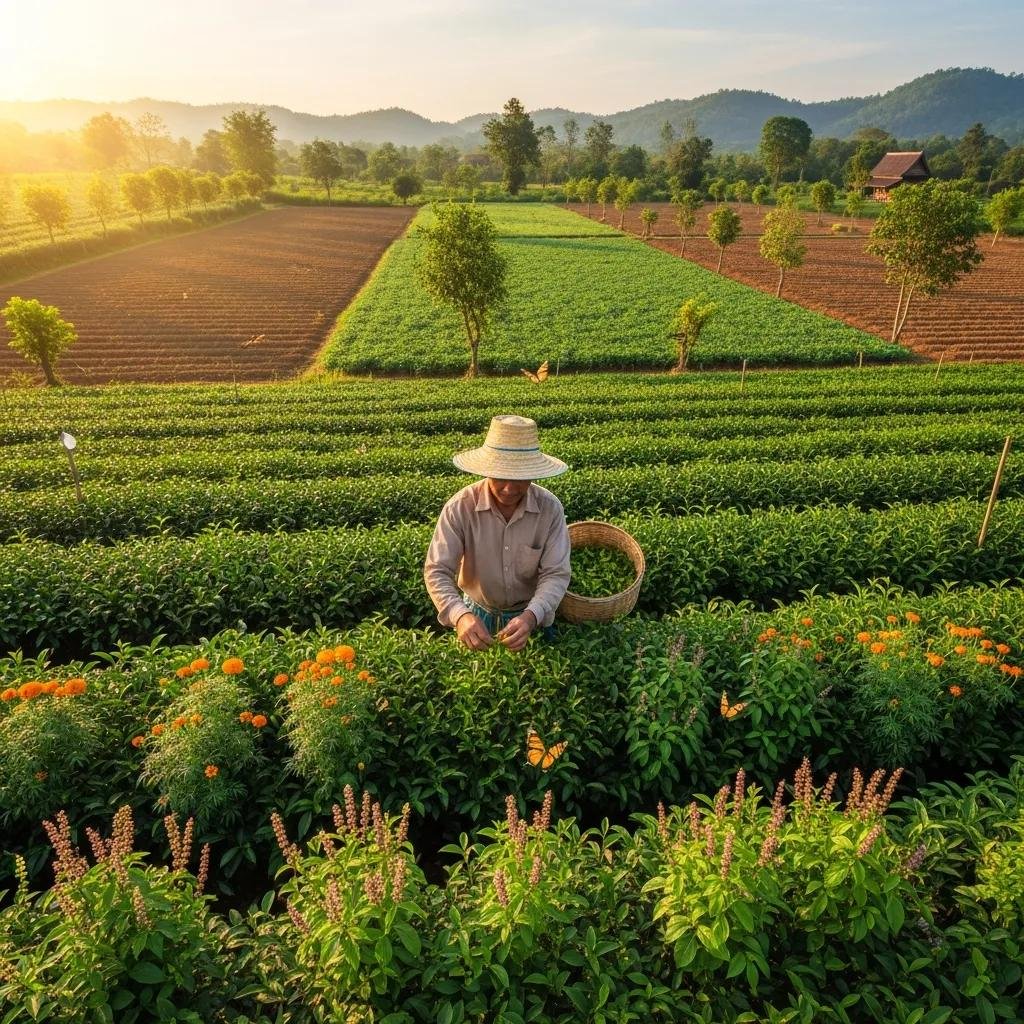
Sustainable Thai tea farming typically includes a mix of practices designed to protect the land and surrounding biodiversity. Examples include organic methods that reduce or eliminate synthetic pesticides and fertilisers, careful water management to reduce waste, and techniques such as crop rotation, intercropping, and agroforestry to support soil health and resilience. Systems that integrate trees and diverse plants around tea bushes tend to provide more habitat for wildlife and can buffer farms against climate variability.
Field research in northern Thailand shows that lower‑intensity, more diverse systems often support higher plant diversity in and around tea plantations.
Biodiversity and Farming Intensity in Northern Thai Tea
A study of tea plantations under different management types in northern Thailand found that agroforestry systems with lower agricultural intensity and more complex landscapes had the highest weed species diversity. This suggests that less intensive, more diverse tea systems can help maintain higher on‑farm plant diversity and the traditional knowledge associated with those plants.
Weed diversity and uses: a case study from tea plantations in northern Thailand, H. Balslev, 2017
How Does Sustainably Sourced Thai Tea Fit into Wellness‑Oriented Choices?
For many people, wellness is about more than just nutrients; it includes peace of mind about what they drink and how it was produced. Sustainably sourced Thai tea appeals to wellness‑focused consumers because it typically involves fewer synthetic inputs, greater attention to ecosystem health, and more transparency. It can be one part of a broader routine that values mindful consumption and respect for producers and the environment.
How Can Organic Thai Tea Support Digestive Comfort and Relaxation?
Organic Thai tea, when made from black tea and traditional herbs, offers a familiar tea experience without the use of synthetic pesticides and fertilisers in the growing process. Many drinkers report that a warm cup of Thai tea, especially blends featuring lemongrass or cardamom, feels soothing after meals and helps them unwind. Research comparing organic and conventionally fertilised tea crops has found that organic management can increase certain polyphenols and antioxidant activity in the finished tea, contributing to a high‑quality beverage profile.
Organic Tea, Quality and Antioxidant Profile
Studies on tea grown under organic versus conventional management have shown that organic fertilisation can produce higher polyphenol content and stronger antioxidant activity compared with control or purely inorganic systems. In animal models, extracts from organically grown tea performed better in certain digestive‑related tests than extracts from conventionally grown tea, highlighting how management practices can influence tea quality.
Studies on tea quality grown through conventional and organic management practices: its impact on antioxidant and antidiarrhoeal activity, S. Palit, 2008
What Is “Clean Caffeine” in the Context of Thai Tea?
When people talk about “clean caffeine” in tea, they usually mean naturally occurring caffeine from tea leaves, consumed without heavy additives or ultra‑sweeteners, and balanced by other tea compounds like L‑theanine and polyphenols. In sustainably sourced Thai tea, you get this caffeine in the context of a carefully grown crop, often with fewer chemical inputs. Many tea drinkers find this provides a gentler lift than coffee, especially when enjoyed in moderate amounts and earlier in the day.
How Does Sustainable Sourcing Shape the Environment and Biodiversity in Thailand?
Sustainable sourcing can make a noticeable difference to landscapes in Thailand, where tea is often grown in mountainous or forest‑adjacent regions. Practices that protect soil, water, and wild species help maintain the long‑term viability of tea regions and the broader ecosystems they are part of.
What Are the Environmental Benefits of Organic and Wild‑Harvested Thai Tea Herbs?
Organic and carefully wild‑harvested Thai herbal ingredients support environmental sustainability by reducing chemical inputs and protecting natural plant communities. Organic farming avoids synthetic pesticides and fertilisers, improving soil structure and reducing runoff into rivers and streams. Responsible wildcrafting — harvesting from wild populations in limited, monitored amounts — can support both biodiversity and local livelihoods when done under clear guidelines. Choosing teas that use these approaches helps preserve diverse plant species and the habitats they depend on.
How Does ArtisanThai Work with Sustainable Farmers and Landscapes?
ArtisanThai partners with farmers who prioritise organic and low‑impact cultivation methods. This includes avoiding synthetic chemicals, protecting local water sources, and maintaining or introducing shade trees and companion plants around tea fields. The company also works to maintain long‑term relationships with growers, supporting traditional knowledge and farming practices that respect local ecosystems and communities.
How Can You Identify Authentic, Sustainably Sourced Thai Tea?
From a consumer point of view, one of the biggest challenges is knowing which teas genuinely reflect sustainable sourcing and which just use green‑sounding language. Certifications, brand transparency, and third‑party information can all help.
Which Certifications and Labels Should You Look For?
Certifications are not the only way to judge a tea, but they can be a helpful starting point. Common labels include:
| Certification | What It Indicates | Why It Matters |
|---|---|---|
| Fair Trade | Focus on fair pay, safer conditions, and community investment | Supports farmer livelihoods and local development |
| USDA Organic / Equivalent | Avoids synthetic pesticides and fertilisers, follows organic standards | Benefits soil and water quality, and can reassure consumers |
| Rainforest Alliance | Emphasises biodiversity, climate resilience, and sustainable livelihoods | Helps protect ecosystems and supports farm communities |
Products may carry one or more of these labels, or national equivalents, depending on where they are produced and sold.
How Do You Check Authenticity and Transparency in Thai Tea Supply Chains?
To assess a brand’s authenticity and transparency:
- Read its sourcing page or FAQs for details on regions, partner farms, and cultivation methods.
- Look for photos, stories, or case studies featuring growers and landscapes rather than generic stock imagery only.
- Check whether the brand names specific certifications, testing protocols, or partnerships with NGOs or local co‑ops.
- Notice whether the brand is honest about limitations and areas for improvement, not just marketing highlights.
Brands that offer specific, verifiable information make it easier for you to align purchases with your values.
What Do Sustainable Sourcing Stories Mean for Thai Tea Farmers?
Sustainable sourcing has human consequences: it can influence whether smallholder farmers feel secure enough to keep working the land, pass on knowledge, and invest in their communities.
How Does ArtisanThai Support Smallholder Farmers and Local Communities?

ArtisanThai works directly with smallholder farmers, offering fair prices and stable purchasing agreements where possible. In addition to paying for crops, the company supports community initiatives such as training, infrastructure improvements, or cultural projects, depending on local needs. When you choose ArtisanThai products, part of your purchase helps reinforce these long‑term relationships and community‑level benefits.
Why Do Farmer Stories Matter for Trust and Culture?
Farmer stories give a face and voice to tea production, helping consumers understand who is behind the product. Sharing experiences about planting, harvesting, and daily life in tea‑growing regions can build trust and appreciation for the work involved. It also helps preserve cultural knowledge and respect for traditional practices, which might otherwise be overshadowed by industrial farming models.
How Is Sustainable Sourcing Shaping Consumer Choices and Market Trends?
As awareness grows, more tea drinkers are paying attention to labels, origin, and sourcing statements, not just flavour. This shift is starting to reshape the Thai tea market.
Why Are People Willing to Pay More for Sustainable Thai Tea?
Many consumers now see value not only in what a product does for them, but also in what it does for others and for the planet. When people pay a bit more for sustainably sourced Thai tea, they often feel they are supporting fairer and more environmentally responsible systems. This added sense of contribution and integrity can make the drinking experience more satisfying, especially for those who see food and drink as part of their ethical footprint.
How Does Supporting Sustainable Thai Tea Connect to Global Wellness and “Clean” Beverage Trends?
Global wellness trends increasingly highlight clean labels, known origins, and plant‑based, minimally processed drinks. Sustainably sourced Thai tea fits well into this landscape: it offers natural caffeine, traditional herbs and spices, and a traceable story from farm to cup. For wellness‑focused consumers, this combination of enjoyment, moderate caffeine, and ethical sourcing can be more appealing than anonymous, heavily processed drinks.
How Does ArtisanThai Show Its Commitment to Sustainable and Ethical Thai Tea?
ArtisanThai positions sustainability and ethics as core to its work with Thai tea and herbal products. The company’s sourcing and quality policies reflect this focus.
What Are ArtisanThai’s Key Sourcing Policies and Practices?
ArtisanThai’s sourcing policies include preferences for organic or low‑input farming, partnerships with smallholder communities, and fair‑trade‑aligned pricing where feasible. The company works to maintain long‑term relationships rather than short‑term spot buying, which can help farmers plan and invest. This approach aims to combine high‑quality tea with positive social and environmental outcomes.
How Does ArtisanThai Handle Product Quality and Safety?
To protect consumers and uphold quality, ArtisanThai uses quality‑control steps such as batch tracking, sensory evaluation, and third‑party lab testing where appropriate. The company follows safety regulations, including Thai FDA requirements where relevant, to check for contaminants of concern. Sharing information about these measures helps build trust that the Thai tea you receive is both enjoyable and responsibly produced.
What Can You Do to Support Sustainable Thai Tea Production?
Individual choices add up. By being intentional about which brands you support, you can encourage more sustainable practices in the Thai tea sector.
How Can You Make More Informed Thai Tea Purchases?
When buying Thai tea:
- Look for clear origin, ingredient, and certification information on packaging and websites.
- Favour brands that explain their farmer relationships and environmental commitments.
- Ask questions if information is missing; responsive brands are often happy to share more.
- Share what you learn with friends or on social media to increase awareness.
These steps encourage transparency and reward companies that invest in sustainable sourcing.
What Role Do Consumers Play in Encouraging Sustainable Tea Farming?
When enough consumers consistently choose sustainably sourced tea, it sends a strong signal to the market. Brands then have more incentive to support organic practices, fair prices, and long‑term partnerships with farmers. Over time, this demand can help shift industry norms toward more responsible farming and sourcing models, benefiting both people and ecosystems connected to Thai tea.
In short, sustainable sourcing can turn a daily cup of Thai tea into a small but meaningful part of a larger story: one that links your own wellbeing with fair livelihoods for farmers and healthier landscapes in Thailand.
 English
 Chinese
 French
 German
 Hindi
Hindi Indonesian
 Malay
Malay Portuguese
 Spanish